
Choosing the right software for data recovery, backup, and system management is no longer a simple decision. The market is crowded with tools that promise fast recovery, complete protection, and advanced features—but not all deliver equally. Some prioritize technical depth at the cost of usability, while others offer simple interfaces but limited functionality. In this competitive landscape, EaseUS has emerged as a strong contender, often positioned against well-known alternatives across data recovery, backup, and disk management categories.
This comprehensive comparison explores EaseUS versus its major competitors, examining usability, features, performance, reliability, pricing, and real-world effectiveness. Rather than focusing on marketing claims, this analysis looks at how EaseUS actually compares when placed side by side with other popular software solutions. The goal is to help users make an informed choice based on their needs, skill level, and expectations.
The Competitive Software Landscape
Data management software broadly falls into three categories: data recovery tools, backup and protection solutions, and disk or system utilities. Many competitors focus heavily on one area, offering specialized features aimed at advanced users or enterprise environments. EaseUS, however, positions itself as a multi-purpose ecosystem, offering solutions across all three categories under one brand.
Competitors often excel in niche scenarios—such as forensic recovery, enterprise backup, or command-line disk operations—but may lack accessibility or affordability. EaseUS enters this space with a different philosophy: deliver reliable, professional-grade functionality while remaining approachable for non-technical users.
This fundamental difference shapes how EaseUS compares across nearly every metric.
Ease of Use: Accessibility vs Complexity
One of the most noticeable differences between EaseUS and many competitors is usability. Competitor software often assumes a certain level of technical knowledge, presenting users with complex interfaces, unfamiliar terminology, or risky manual configurations.
EaseUS takes a contrasting approach. Its interfaces are visual, guided, and clearly labeled. Tasks are broken into logical steps, reducing the chance of user error. For example, recovery, backup, or partition tasks follow structured workflows rather than requiring users to understand file systems or disk architecture in depth.
While power users may appreciate the control offered by more complex tools, EaseUS wins decisively for beginners and intermediate users who want results without confusion.
Feature Breadth: All-in-One vs Single-Purpose Tools
Many competing products specialize in a single function. Some focus only on data recovery, others on backup, and some exclusively on disk management. This specialization can be beneficial in advanced scenarios but often requires users to install and manage multiple tools.
EaseUS stands out by offering a unified ecosystem. Users can recover lost data, protect systems with backups, manage disks safely, and migrate data between systems—all within a consistent software environment. This reduces compatibility issues and learning curves.
Competitors may offer deeper control in specific areas, but EaseUS provides broader coverage, making it more practical for users who need versatility rather than specialization.
Data Recovery Comparison
In data recovery, competitors often market aggressive claims about recovery rates and advanced algorithms. EaseUS competes strongly here by combining effective scanning technology with user-friendly execution.
While some competitor tools expose low-level scanning options and manual file carving, EaseUS automates these processes behind the scenes. This means users get comparable recovery results without needing to understand technical recovery methods.
Additionally, EaseUS emphasizes preview and filtering features, allowing users to verify files before recovery. Some competitors either limit previews or present results in less organized formats, making it harder to locate specific files.
EaseUS’s recovery strength lies not just in capability, but in how clearly it presents results to users.
Backup and Protection Capabilities
When comparing backup software, differences become even more pronounced. Enterprise-focused competitors often provide powerful backup engines but require extensive configuration. This complexity can be overwhelming for individuals and small businesses.
EaseUS backup solutions prioritize automation and clarity. Backup creation, scheduling, and restoration are designed to be intuitive. Users can choose from full, incremental, or differential backups without navigating complex rule systems.
While enterprise competitors may offer advanced network or server-level options, EaseUS delivers more than enough protection for personal users and small organizations—without the administrative burden.
Disk and Partition Management
Disk management is an area where mistakes can be costly. Some competing tools expose raw disk operations with minimal guidance, increasing the risk of accidental data loss.
EaseUS differentiates itself by offering visual disk layouts, previews, and confirmation steps. Before changes are applied, users can review the impact, reducing errors significantly. This makes EaseUS safer for users unfamiliar with partition structures.
Competitors may appeal to advanced users who want granular control, but EaseUS offers a safer environment for the majority of users who prioritize data safety over experimentation.

Performance and Resource Usage
Performance is a critical comparison point. Some competitors deliver fast results but heavily tax system resources, slowing down other tasks. Others prioritize stability at the cost of speed.
EaseUS strikes a balance. Its tools are optimized to run efficiently without overwhelming system resources. Scans, backups, and disk operations can often run in the background, allowing users to continue working.
In real-world use, EaseUS tends to offer smoother performance for everyday systems, particularly laptops and mid-range machines, compared to some resource-heavy competitors.
Pricing and Value Comparison
Pricing models vary widely among competitors. Some charge high upfront fees, others rely on subscriptions, and some limit functionality severely in free versions.
EaseUS adopts a freemium approach that allows users to test features before upgrading. Paid versions unlock higher limits and advanced options, but pricing remains competitive relative to the range of tools included.
Compared to competitors that require separate licenses for recovery, backup, and disk management, EaseUS often delivers better overall value by bundling functionality under a single brand.
Learning Curve and Onboarding
Competitor software often assumes users will read documentation before starting. EaseUS, by contrast, integrates learning into the software itself. Tooltips, guided steps, and clear instructions reduce the need for external resources.
This difference is especially noticeable for first-time users. EaseUS allows users to achieve results quickly, while competitors may require experimentation or prior experience.
For users who want productivity rather than technical exploration, EaseUS provides a smoother onboarding experience.
Reliability and Success Rates
Reliability is difficult to measure objectively, but user experience offers strong indicators. EaseUS has built a reputation for consistent performance across updates and operating system versions.
Some competitors are highly effective in specific scenarios but less reliable across diverse environments. EaseUS focuses on stability across common use cases, making it a dependable everyday solution.
This consistency contributes significantly to user trust, especially when working with important or sensitive data.
Platform and Device Compatibility
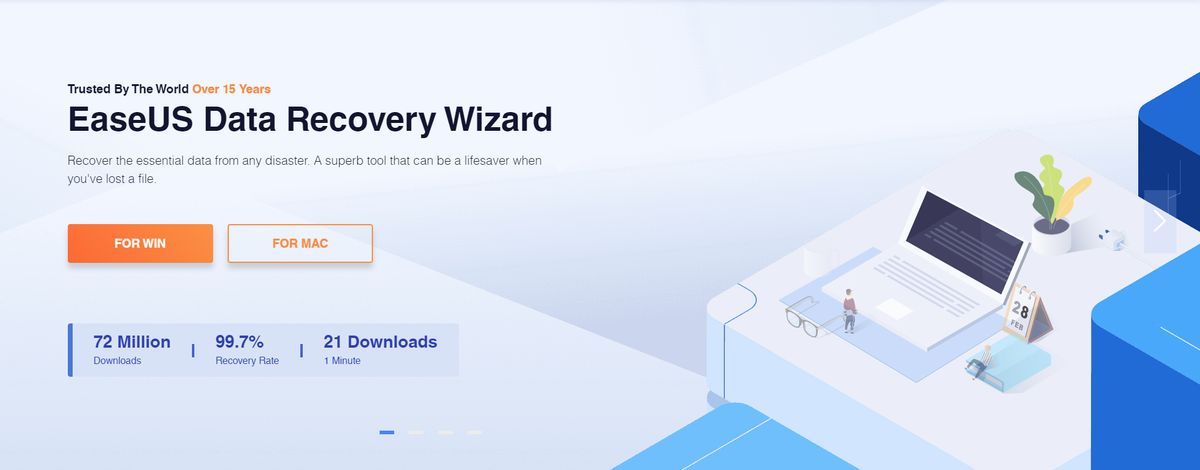
EaseUS supports both Windows and macOS platforms, covering modern file systems and storage technologies. External drives, USB devices, memory cards, and SSDs are handled seamlessly.
Some competitors focus heavily on one platform or lag behind in supporting newer file systems. EaseUS’s broad compatibility ensures longevity and adaptability.
For users operating in mixed-device environments, this cross-platform support is a major advantage.
Security and Data Safety
Data protection software must operate safely. EaseUS emphasizes read-only scanning, secure backup handling, and optional encryption. These practices minimize the risk of further data loss or exposure.
While competitors also prioritize security, some advanced tools require manual configuration to achieve similar safety levels. EaseUS simplifies secure behavior by making it the default.
This design choice benefits users who may not fully understand the risks associated with unsafe operations.
Customer Support and Documentation
EaseUS provides extensive documentation, guides, and customer support options. While enterprise competitors may offer dedicated account managers, EaseUS delivers responsive support suited to its target audience.
For individual users and small businesses, this level of support is often sufficient and reassuring.
Who Should Choose EaseUS?
EaseUS is best suited for users who value simplicity, reliability, and versatility. Students, professionals, creators, and small business owners will find it easier to use and more cost-effective than many competitors.
Advanced enterprise environments or forensic use cases may require more specialized tools, but for most real-world scenarios, EaseUS offers an excellent balance.
Where Competitors May Have an Edge
It is important to acknowledge that some competitors excel in niche areas. Enterprise-grade solutions may offer advanced network backups or forensic-level recovery tools beyond EaseUS’s scope.
However, these advantages often come with higher costs, complexity, and steeper learning curves. EaseUS intentionally avoids this trade-off to remain accessible.
Overall Comparison Summary
When comparing EaseUS to competitors as a whole, a clear pattern emerges. Competitors often prioritize specialization, while EaseUS prioritizes usability and breadth. Neither approach is inherently superior, but EaseUS’s strategy aligns better with the needs of most users.
EaseUS delivers dependable performance across multiple categories without overwhelming users, making it a strong all-around choice.
EaseUS vs the Rest
EaseUS does not try to outdo competitors in technical complexity—it outperforms them in practical usability and balanced capability. Its strength lies in making powerful tools accessible, reliable, and safe for everyday users.
In this complete software comparison, EaseUS emerges as a smart choice for those who want comprehensive data management without the stress of mastering complex systems. While competitors may appeal to niche audiences, EaseUS succeeds by serving the majority exceptionally well.
For users seeking a dependable, user-friendly, and versatile solution, EaseUS stands confidently ahead of the competition—not by being the most complex, but by being the most usable.